Gunfights and Films: The Presidential Edition
Gunfights and Films: The Presidential Edition
Today we take a look at a non-fiction film about a very famous President as well as a look at a very famous fictional President. Both movies came out in the beginning and the end of the 90's, with JFK arriving in 1991 and Air Force One appearing in 1997. Both films include a lot of action, well written dialogue and fantastic cinematography. The actors in both movies are award winning and bring their A game to the screen.
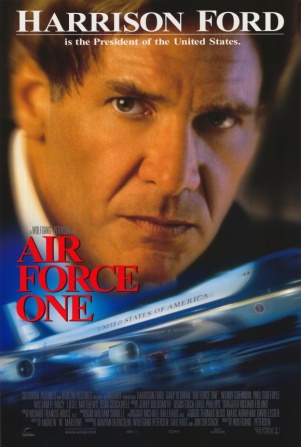
Air Force One is a 1997 thriller starring Harrison Ford as the President of United States, who finds himself the only one who can stop the terrorists who have hijacked the Presidential airliner. The film was directed by Wolfgang Petersen and is distinctive to movie gun enthusiasts for being the first documented film to feature the M4A1 Carbine. Harrison Ford plays James Marshall, a onetime combat hero in the Vietnam War who is now President of the United States. While visiting the former Soviet Union, Marshall gives a speech in which he supports a get-tough attitude against both terrorists and a right-wing general and war criminal from Kazakhstan imprisoned in Moscow, earning him few friends in the Eastern Bloc. While flying back to the United States aboard Air Force One, Marshall and his staff discover that one of the journalists returning with them is actually Ivan Korshunov, a Kazakhstani terrorist, who hijacks the plane with three associates and holds the president hostage as well as his wife and daughter on board. Marshall must use his strength and intelligence to keep the terrorists at bay and devise a plan to allow his family to escape to safety, while on the ground the vice-president, the secretary of defense, and the attorney general grapple over what to do and how much control to take in this crisis.
The film begins with an American Special Forces unit capturing General Ivan Radek, the dictator of Kazakhstan. Radek's regime had caused an enormous amount of bloodshed for Kazakhstan, and there was word that his stockpiling of nuclear weapons would have plunged the world into a second cold war. His capture was made through the joint cooperation of President James Marshall and Russian President Petrov.
Several weeks after the capture of Radek, President Marshall visits Moscow, along with his wife Grace and daughter Alice. While Marshall is praised for his help in freeing Kazakhstan from Radek's grip, Marshall surprises everyone by deviating from his planned speech. Marshall says that they were too slow to act, and vows to not allow such a thing happen again.
Marshall, his family, and his men are then returned to Air Force One, which takes off on its return trip to Washington D.C. Unknown to the President or anyone else, a rogue secret service agent named Gibbs has secretly allowed into the plane several men who are supporters of General Radek. Gibbs kills several agents in a crucial protective position on the plane and the hijackers, led by Egor Korshunov don bulletproof vests and collect weaponry that is used by the Secret Service. Korshunov and his men quickly gain control of the plane, killing several Secret Service officers and capturing the 1st Lady and the president's staff. In the chaos, Marshall is ordered into an escape pod in the cargo hold.
Air Force One's pilots attempt an emergency landing at Ramstein Air Base, but are soon killed with one of Korshunov's men taking control of the plane. A group of F-15's are sent after Air Force One as an escort. The plane is piloted towards Kazakhstan, and Korshunov places a direct call to the White House, where Vice-President Kathryn Bennett and Defense Secretary Walter Dean listen to Korshunov's demands. Korshunov requests the release of General Radek, with the stipulation that a hostage will be executed every half hour until his demands are met. Shortly thereafter, the President's escape pod is found, but he is not inside. During the firefight, Marshall hid aboard the plane, intent on saving his family, a fact which neither the White House or Korshunov are aware. Korshunov assumes that the President escaped Air Force One, while the empty pod's discovery by the White House has them speculating that Korshunov and his men have killed Marshall.
Bennett calls President Petrov, in hopes that he can release Radek temporarily, thinking that once Ivan has released the hostages, they can quickly recapture him. However, Petrov is not willing to give into this request without proof that the President is alive. After 30 minutes, Korshunov calls the White House to find out if Radek has been released. When Bennett tries to stall for time, Korshunov coldly executes National Security Adviser Jack Doherty. Korshunov then has Grace and Alice brought to the cockpit, leaving several men to guard the rest of the hostages.
Marshall attempts to find his family, but almost is taken out by a henchman, before he kills him. Marshall returns to the cargo hold where he manages to find a cellular phone, and places a call to the White House switchboard. Marshall argues with the switchboard operator when she questions his claim to be The President, and he demands she trace the call. As she realizes that Marshall is who he says he is, one of Korshunov's henchmen finds Marshall. Marshall sticks the phone in his pocket. At this point, the call is transferred through to the White House situation room, and Marshall gives indirect orders for one of the F-15's escorting the plane to fire on them. Bennett relays the order, and the shock wave from the blast throws the henchman off-balance, allowing Marshall to kill him. Marshall then speaks directly to Bennett and the others, claiming they cannot give up Radek, and need to find some way to get the plane on the ground.
Meanwhile, Korshunov has found out about the killing of two of his men and has assumed there is a Secret Service agent hiding in the cargo hold. After having Deputy Press Secretary Melanie Mitchell brought to the cockpit, he turns on the plane's speaker system, threatening to kill Melanie if the person in the cargo hold does not surrender. Painfully, Marshall does not comply, and Melanie's execution is heard throughout the plane.
In a storage fridge in the cargo hold, Marshall notices a punctured milk container, and gets the idea to dump the plane's fuel, which should force the plane to land. When the plane registers that it is leaking fuel, Egor sends two of his men to check on this. They are almost killed by Marshall, but as they go to fix the fuel leak, Marshall sneaks up to the main cabin, and subdues another henchmen.
The two then gain entrance to the room where the hostages are. Marshall states emphatically he is not leaving without his family, but wants to save the hostages. Major Caldwell proposes that if they can get the plane to descend to 15,000 feet, and use the parachutes in the cargo hold, they can get off the plane. The secret fax message is received by the White House, shortly after Korshunov calls demanding a mid-air refueling. Bennett attempts once more to negotiate for a hostage release by requesting they land the plane for refueling, but Korshunov's threat to kill a passenger every minute until they are refueled forces her to give into his demands. Bennett soon has to deal with the matter in another way, when CNN reports a rumor that Air Force One has crashed. Bennett goes before the White House Press Room to quell the rumor, and informs the public for the first time regarding the hijacking of the airplane.
A KC-10 is dispatched and soon after refuels Air Force One. Both planes descend to 15,000 feet. Caldwell and several others activate the cargo hold doors, and numerous people begin dropping from the plane, activating their parachutes. However, the opening of the cargo doors is seen in the plane's cockpit, and several of Korshunov's men are sent to investigate. Finding the door locked, one of them uses an oxygen tank to blast the lock, causing a number of people to plummet out of the plane. The sudden blast causes the refueling effort to go wrong, and the KC-10 struggles to break free. However, the fuel leaking from the plane ignites and the KC-10 explodes.
Marshall just barely survives being sucked out the cargo hold, clinging to part of the cargo door. Caldwell manages to pull Marshall to safety, and they are soon taken hostage by Korshunov's men. Egor then calls the White House, announcing that he now has the President, and orders the F-15 escort to divert once they enter Kazakhstani airspace. Bennett immediately complies with this request.
Marshall is brought before Korshunov, who demands that Marshall call Petrov to release Radek, promising that they can go free once the General is released. Marshall refuses, until Korshunov threatens to kill Alice. Forced to save his family, Marshall gives in, and calls Petrov for the release of Radek. As Radek's release is broadcast through the plane's P.A. system, Korshunov explains further that he lied to Marshall. He further intends to turn Marshall and his family over to Radek.
At the same time, Marshall secretly gets hold of a piece of glass, and cuts through his bindings. Marshall then attempts to subdue Korshunov, but is almost shot by one of Korshunov's henchman. The bullet meant for Marshall is taken by Agent Johnson. Marshall then manages to take out the gunman, but in the ensuing struggle, Egor escapes to the cargo hold with Grace. Marshall finds Korshunov wearing a parachute, but also throwing the remaining chutes out the open hold door. Korshunov mocks that with no one to fly the plane and no parachutes, he has won. His short-lived victory is enough time for Grace to distract him, before Marshall tackles Korshunov. As they struggle, Marshall wraps a strap around Korshunov's neck before activating his parachute. Marshall sharply orders Korshunov to "GET OFF MY PLANE!" and lets go of the terrorist. The strap snaps Korshunov's neck, killing him as he is pulled out the cargo hold door.
Marshall manages to call Petrov and halt the release of Radek. However, Radek makes a run for it when ordered to halt, and is killed. Marshall manages to get assistance from a friend in the White House on how to pilot Air Force One, with Caldwell serving as co-pilot. The plane heads for an airfield in Turkey, but is soon intercepted by some rogue MIG fighters piloted by Radek loyalists. The F-15's that turned away at Kazakhstan's borders move in to intercept the MiGs. Most of the MiGs are destroyed by the American pilots but Air Force One loses an engine and suffers major damage to its tail gear, preventing a safe landing.
With no way to land and the plane losing fuel, a C-130 Hercules is routed towards Air Force One, and a mid-air zip line rescue is put into effect. Though efforts are made to save Marshall first, he demands that his wife and daughter be transferred first. The wounded Agent is the third person across, but due to Air Force One's continued engine failure and rapid descent, only one more person can be rescued. Marshall refuses to leave the other men behind, but his words are interrupted as Agent Gibbs shoots the zipline attendant, and also kills Caldwell. Both Gibbs and Marshall fight for the zipline strap, with Marshall just barely getting it attached when the zip line breaks free from the door frame, leaving Gibbs aboard the plane as it crashes and breaks up in the Caspian Sea.
Marshall continues to struggle to secure his zip line strap as the team aboard the Hercules reels him in. Once he is finally secure aboard the Hercules, the pilot changes the plane's call-sign from "Liberty 2-4" to "Air Force One" (this title applies to any aircraft that the President is aboard). As Marshall is reunited with his family, the F-15 squadron resumes flanking positions as they escort the First Family home.
A great film and the actors are absolutely award winning icons. This movie has everything you could want, patriotism, intense action scenes and well written dialogue. Let's take a look at the weapons that were used in this iconic film.
Secret Service Agent Gibbs (Xander Berkeley) uses a Beretta 92FS fitted with a suppressor to execute the Secret Service Agents guarding the armory. Some of the other Secret Service Agents on board Air Force One also use them, even though in real life the Beretta has never been issued to the Secret Service. There is an interesting continuity error in the film, where Agent Walters (Glenn Morshower) (who is trying to evacuate President Marshall via the escape pod) switches from a SIG P226 to a Beretta 92FS.
N.B. USSS Agent Gibbs shares the name of the NCIS Special Agent Gibbs (portrayed by Mark Harmon) on the TV series NCIS and in the series premiere "Yankee White" (S1E01) has the agent investigating a possible terrorist sleeper aboard Air Force One, and a few references to this film are made during the episode.

Beretta 92FS - 9x19mm

Gibbs (Xander Berkeley) with his suppressed Beretta 92FS.

Secret Service Agent Walters (Glenn Morshower) fires on the terrorists while trying to protect President Marshall. He starts out using a SIG P226 (left), but somehow switches to a Beretta 92FS (right) before he dies.
The Secret Service Agents on Air Force One are armed mostly with SIG-Sauer P226 pistols. When the terrorists take over the plane, many of them also use these pistols; Ivan Korshunov carries a P226, which he is commonly seen using to threaten and/or execute hostages. Later in the film, Agent Gibbs is also seen using one.
In real life, the Secret Service would have been using the smaller SIG P228 and P229 at the time of the film's production.

SIG-Sauer P226 - 9x19mm

Korshunov (Gary Oldman) prepares to execute Marshall's press secretary, Melanie Mitchell (Donna Bullock), with his SIG-Sauer P226.

Korshunov threatens Marshall's daughter with his P226.

Korshunov holds the SIG P226 to Marshall's head.

A close-up of a P226 in the hands of Gibbs during the film's climax.
To watch the sequence where the plane gets hijacked you can watch it here:
Don't forget to take a look at our website to see what we have in stock for your SIG today:
Sig Sauer accessories
When Secret Service Agent Gibbs (Xander Berkeley) opens up the weapons storage cabinet on Air Force One for Ivan Korshunov's (Gary Oldman's) Russian Ultranationalists, the terrorists get their hands on a number of Heckler & Koch MP5A3 submachine guns. President James Marshall (Harrison Ford) also uses one of these weapons after taking it from one of the terrorists, and both Agent Gibbs and Major Caldwell (William H. Macy) also handle these weapons.
The MP5A3s used in this movie are the same partially-converted HK94A3 carbines from the Stembridge Gun Rentals inventory that have appeared in numerous other motion pictures (including Predator, Lethal Weapon, Die Hard, etc.). Throughout the movie, close-ups of the guns reveal that they have the all-metal 0-1 trigger group of the HK94 (with a "2" position for full-auto engraved), as well as barrels that are missing the attachment lugs (for bayonets, flash hiders, and other accessories). IMFDB's exclusive picture of a "mock MP5" (seen below) is believed to be one of the actual screen-used weapons from Air Force One.

A Heckler & Koch HK94A3 converted to a resemble an MP5A3, with a chopped barrel and converted to auto, with a third firing position added to the lower receiver. This may be one of the actual screen-used guns from Air Force One (unconfirmed).

Russian terrorist Vladimir Krasin (Ilia Volok) with an H&K MP5A3 (actually a partially-converted HK94).

Marshall in the cargo hold with a MP5A3.
.

Agent Gibbs (Xander Berkeley) holds an MP5 on terrorist Igor Nevsky (David Vadim).

Marshall gets cornered by terrorist Boris Bazylev (Andrew Divoff) while holding his MP5A3. Note that the barrel of the gun lacks the attachment lugs, indicating that the MP5 is actually an Heckler & Koch HK94A3 that has had its barrel chopped.

Major Caldwell (William H. Macy) covers the hostages' escape from the conference room with his MP5A3 at the ready. Note his trigger discipline.
To watch the sequence where Marshall gets armed you can do so here:
The terrorists also take several Colt M4A1 carbines from the weapons cabinet, all of which have had their carry handles removed and replaced with C-More optical sights (they also have something attached to the barrel...laser sights?) Ivan Korshunov uses this weapon when the terrorists first start to take control of the plane, firing in vain at the cockpit door at one point. This weapon is also fired by Andrei Kolchak (Elya Baskin). Later in the film, Major Caldwell (William H. Macy) can briefly be seen wielding Korshunov's M4 when President Marshall is running back to the cockpit to call off Radek's release.
Although the fixed-carry handle Colt Model 727 (which is a full-auto version of the earliest M4, AKA the Model 777) had already appeared in Crimson Tide and Broken Arrow when this movie came out, it appears that Air Force One is the very first Hollywood film to feature the flattop M4 carbine that is so familiar to American audiences today.

Colt M4A1 Carbine - 5.56x45mm

Ivan Korshunov (Gary Oldman) loads up an M4A1 as the terrorists prepare to take over the plane.

Korshunov on a conference call in the command center of Air Force One. The M4 is lying across the table in the foreground.

A closer view of an M4A1 in the weapons cabinet.
To watch the scene titled "The Commander-In-Chief" you can do so here:
For more information on the weapons used in this movie you can go here: http://www.imfdb.org/wiki/Air_Force_One
Air Force One is slam-bang action sequences and plot twists that fly fast and furious in this nail-biter of a film. Grab some hot dogs, some soda pop and settle in for this all American movie this weekend.

JFK
is a 1991 drama directed by Oliver Stone and stars Kevin Costner as Jim Garrison, the New Orleans District Attorney who comes to believe that there was an conspiracy behind the assassination of President John F. Kennedy. The film's cast included Tommy Lee Jones, Kevin Bacon, Ed Asner, Jack Lemmon, Walter Matthau, Michael Rooker, John Candy and Joe Pesci.The film opens with a narration showing newsreel footage, including the farewell address in 1961 of outgoing President Dwight D. Eisenhower, warning about the build-up of the "military-industrial complex". This is followed by a summary of John F. Kennedy's years as president, emphasizing the events that, in Stone's thesis, would lead to his assassination. This builds to a reconstruction of the assassination on November 22, 1963. New Orleans District Attorney Jim Garrison subsequently learns about potential links to the assassination in New Orleans.
Garrison and his team investigate private pilot David Ferrie, but are forced to let them go after their investigation is publicly rebuked by the federal government. Kennedy's alleged assassin Lee Harvey Oswald is killed by Jack Ruby before he can go to trial two days after the assassination, and Garrison closes the investigation.
Three years later, the investigation is reopened in late 1966 after Garrison reads the Warren Commission Report and notices what he believes are numerous inaccuracies and conflicts. Garrison and his staff interrogate several witnesses to the Kennedy assassination, and others who were involved with Oswald, Ruby, and Ferrie. Russell B. Long, a Democrat senator, privately tells Garrison about the FBI investigation into Oswald and evidence surfaced that it was technically impossible for Oswald to fire off three shots from a bolt-action rifle in pinpoint accuracy that killed John F. Kennedy.
Garrison and his associates question Jack Martin a former private investigator who worked with the late Guy Banister where Martin recalls Banister beating him with a pistol that day three years earlier after discovering that Banister's office had been broken into and several files stolen from the office. Banister was a career member of the FBI before he became a private investigator and then died suddenly of a what was thought to be a heart attack nearly one year after the Warren Commission released its report. Martin tells Garrison that Oswald had met with Banister a few times during his brief stay in New Orleans and that Oswald and Ferrie knew each other and were employed on some special project with Cuban anti-communist militants.
Garrison meets with Dean Andrews, Jr., an eccentric lawyer who claims that an alleged phone call was made to him by one of his clients, named Clay Bertrand on the day after the Kennedy assassination in which Andrews was asked to represent Oswald in the assassination charges against him. Andrews tells Garrison that he may be in over his head with those who may have been involved.
Another witness Garrison meets with is Willie O'Keefe, a male prostitute currently serving five years in prison for soliciting, who reveals he witnessed Ferrie discussing Kennedy's assassination with Oswald, and a group of Latin men. As well as briefly meeting Oswald, O'Keefe was romantically involved with a man he knew as Clay Bertrand also known as Clay Shaw, a wealthy New Orleans businessman. Upon Garrison's informal questioning, Shaw denies any knowledge of meeting Ferrie, O'Keefe or Oswald, but he is soon charged with conspiring to murder the President.
In Dallas, others come forward, including Jean Hill. She tells the investigators that she witnessed shots fired from the grassy knoll and she heard four to six shots total, but Secret Service agents threatened her into saying only three shots came from the book depository; the implication is that changes that were made to her testimony by the Warren Commission.
Garrison and a staff member also go to the sniper's location in the Texas School Book Depository and aim an empty rifle from the window through which Oswald was alleged to have shot Kennedy. They conclude that Oswald was too poor a marksman to make the shots, and two of the shots were much too close together, indicating that one or two more additional assassins were also involved.
Another person comes forward named Rose Cheramie, a Dallas prostitute who was allegedly beaten up by Jack Ruby's bodyguards. She tells Garrison that she was taken to a clinic on that day where she tried to warn the doctors that the Mafia was planning on killing President Kennedy.
After discovering electronic surveillance microphones that had been planted in his offices, Garrison meets a high-level figure in Washington D.C. who identifies himself as "X". "X" suggests there was a conspiracy at the highest levels of government, implicating members of the CIA, the military-industrial complex, Cuban exiles, the Mafia, and Secret Service, FBI, and even Kennedy's vice-president, Lyndon B. Johnson, as either direct conspirators, co-conspirators, or, as having motives to cover up the truth after the assassination. "X" explains Kennedy was assassinated because his foreign policy would have meant diminished profit for the military-industrial complex, and enraged high-ranking military officials who viewed such diplomacy as weakness. Kennedy ordered control of secret paramilitary operations to be removed from the CIA and handed over to Department of Defense Joint Chiefs of Staff. This would have diminished the agency's power. Further, the Mafia had helped Kennedy win the 1960 election as a favor to his father, Joseph P. Kennedy, Sr, who had done business with the Mafia dating back to the 1920s, and felt betrayed that he had let his brother, Robert F. Kennedy, continue his crusade against the Mob. Furthermore, the Mob wanted revenge for the April 1961 Bay of Pigs incident, which they had helped fund and support in order to get their Cuban casinos their biggest moneymakers back from the hands of the Castro government.
In flashbacks, "X" reveals how his superior, General "Y", had "X" sent on a trip to Antarctica just before the assassination. One of "X"'s duties was to supplement presidential security. He points out all the lapses in security during JFK's fatal trip to Dallas: the open windows along the route, the hairpin turn from Houston to Elm which slowed the limousine, and bystander activities which would not have been allowed. "X" suggests he was ordered out of the country in order to strip away the normal security measures he would have had in place during Kennedy's fateful trip to Dallas.
On his way back from Antarctica, "X" touches down in New Zealand. He reads a local newspaper which mysteriously presents a full dossier on Oswald and his guilt in Kennedy's death. This was hours before Oswald would be charged with the crime and anyone investigating the case knew much about him. "X" views this as clear proof of a cover story of the type used by CIA black ops. In other words, CIA assets in the media were being used to persuade the public of Oswald's guilt.
"X" further states that Kennedy was intent on pulling U.S. troops from Vietnam by the end of 1965 as evidenced by National Security Order 263. This was countermanded immediately by Kennedy's successor, Lyndon Johnson, with National Security Order 273. Therein, concludes "X", lay the foundation of the Vietnam War. "X" encourages Garrison to keep digging and make further arrests.
Two of Garrison's staff, one of whom is Assistant District Attorney Susie Cox (Laurie Metcalf), quit the investigation, doubting his motives and methods. Garrison's marriage is strained when his wife Liz complains that he is spending more time on the case than with his own family. After a sinister phone call is made to their daughter, Liz accuses Garrison of being selfish and attacking Shaw only because of his homosexuality. In addition, the media launches attacks on television and in newspapers attacking Garrison's character and criticizing the way his office is spending taxpayers' money. Some key witnesses become scared and refuse to testify while others, such as Ferrie, die under suspicious circumstances. Before his death, Ferrie tells Garrison that he believes people are after him, and reveals there was a conspiracy around Kennedy's death that involved co-conspirators that were involved in the CIA planned Operation Mongoose.
In June 1968, fellow Assistant District Attorney Bill Broussard meets Garrison at the New Orleans airport where Garrison is boarding for Phoenix, Arizona and tells him the Canadian mob will attempt to assassinate him and is about to get Garrison some serious protection when Garrison confronts Broussard about his orders not to pass rumors about someone going to be killed. Broussard tries in vain to get Garrison to listen, but Garrison refuses, dismissing it as "paranoid garbage." He accuses Broussard of disobeying orders and decides to take him back to New Orleans as punishment. Broussard tries to apologize, but Garrison is too busy to accept it. After a few minutes, he has to flee from a public restroom when he hears strange noises in the adjacent stall and is approached by an unknown man who pretends to be a friend of his. Garrison flees after figuring out that is is about to be set up to be arrested by the airport police as part of a plot by the conspiracy to set him up as a homosexual.
After Garrison returns to New Orleans, he and his staff discovered that Broussard has joined the FBI and disappeared from his apartment. They argue about the real reason why Shaw has been brought to trial. After Liz retires, he sees Robert Kennedy on TV and witnesses Kennedy's assassination. Garrison, who predicted it, and Liz, whose faith in her husband is renewed as a result, reconcile.
The climax of the film is Clay Shaw's trial which takes place in January-March 1969. Garrison presents the court with further evidence of multiple killers while attempting to debunk the single bullet theory, proposes a scenario involving three assassins who fired six total shots, but the jury acquits Shaw on all charges. The film reflects that the jury's members publicly stated that they believed there was indeed a conspiracy behind the assassination of JFK, but there was not enough evidence to link Shaw to that conspiracy. The film ends with Garrison stating to reporters that he'll continue to find out what else may be there in the cover up. The final shot shows Garrison and Liz leaving the courthouse together.
In the end credits, it is mentioned that Clay Shaw died of lung cancer in 1974, but in 1979 Richard Helms testified under oath that Clay Shaw had, in fact, been a part-time contract agent of the Domestic Contacts Division of the CIA. The Justice Department has done nothing to re-open the investigation of the Kennedy assassination. The end credits also state that state secret records related to the assassination will be released to the public in 2029.
Over the years conspiracy theories surrounding the somewhat mysterious demise of the President and although some seem legitimate others seem like tall tales. This film explores some of those theories and presents it with brilliant cinematography and dialogue. JFK is jam packed with award winning actors and there is no denying they all had stellar perfomances. Let's take a look at the weapons used in this controversial movie.
The infamous rifle allegedly used by Oswald is the Carcano M91/38. In several flashbacks, it's seen fired not only by Lee Harvey Oswald (Gary Oldman), but a fake Oswald (Frank Whaley) as well. Both Lou Ivan (Jay O. Sanders) and Jim Garrison are seen holding it while sitting in the depository window.

Carcano M91/38 Short Rifle - 6.5mm

Lou Ivan (Jay O. Sanders) is seen working the Carcano rifle in an attempt to duplicate Oswald's shots.

Jim Garrison (Kevin Costner) holds Oswald's Carcano rifle as he re-enacts the infamous shot.

Lee Harvey Oswald (Gary Oldman) fires the Carcano in Garrison's description of the scene.
To watch the scene titled "Crossfire In Daley Plaza" you can watch it here:
The Cuban rebels who are trained by the CIA are seen carrying M1903 Springfield rifles during their drills. Lee Harvey Oswald appears to be cleaning a disassembled Springfield when he's greeted by Willie O'Keefe (Kevin Bacon).

Springfield M1903 Mk 1 - .30-06

Cuban rebels train with M1903 Springfield rifles.

Lee Harvey Oswald appears to be cleaning a disassembled Springfield when he's greeted by Willie O'Keefe (Kevin Bacon).

Oswald holds a Springfield while Cuban rebels are being trained.
During Garrison's explanation of the assassination, the "Grassy Knoll" shooter appears to be armed with a Winchester Model 70.

Pre-1964 Winchester Model 70 - .30-06

During Garrison's explanation of the assassination, the "Grassy Knoll" shooter appears to be armed with a Winchester Model 70.

The "Grassy Knoll" shooter fires the Winchester Model 70.
To watch the scene in which they go over the Zapruder Film you can do so here:
For more information on the weapons used you can go here: http://www.imfdb.org/wiki/JFK
This film is a little lengthy so when you grab your popcorn make sure you grab enough to last awhile. It's one of those movies that I enjoy watching but is best on a rainy day when I have a whole afternoon to devote to it. Intense but well directed this piece of cinema is mesmerizing. Once you enter the rabbit hole of theories tho, you could spend awhile there so stock up on those snack first.
If you are in interesting in parts for any of the fine Remington series of weapons, take a look: Remington gear
Labels: action films, air force one, award winning actors, bullets, cinema, conspiracy theories, guns, JFK, movies, oliver stone, President's, weapons

 |
| Shawn in the Korengal Valley, Kunar Province, Afghanistan. |
For more info on these and other weapons
Technical specs compiled from:
http://armypubs.army.mil/doctrine/Active_FM.html
http://world.guns.ru/index-e.html
https://en.wikipedia.org
http://www.militaryfactory.com/
http://www.olive-drab.com/
http://www.army.mil/
http://dok-ing.hr/products/demining/mv_4?productPage=general
http://www.peosoldier.army.mil/
posted by Unknown @ 2:58 PM
0 Comments